Web security, monitoring & compliance toolkit.
Scan your website, apps & GitHub for vulnerabilities & exposed keys. Rate-limit your APIs & block attacks, monitor uptime, domain & SSL expiry, and check compliance, all in one security platform.
- Scan & pentest
- Monitoring & uptime
- Multi-channel alerts
- API rate limits
- 360° protection
- SDKs, MCP & AI Skills
By cybersecurity experts
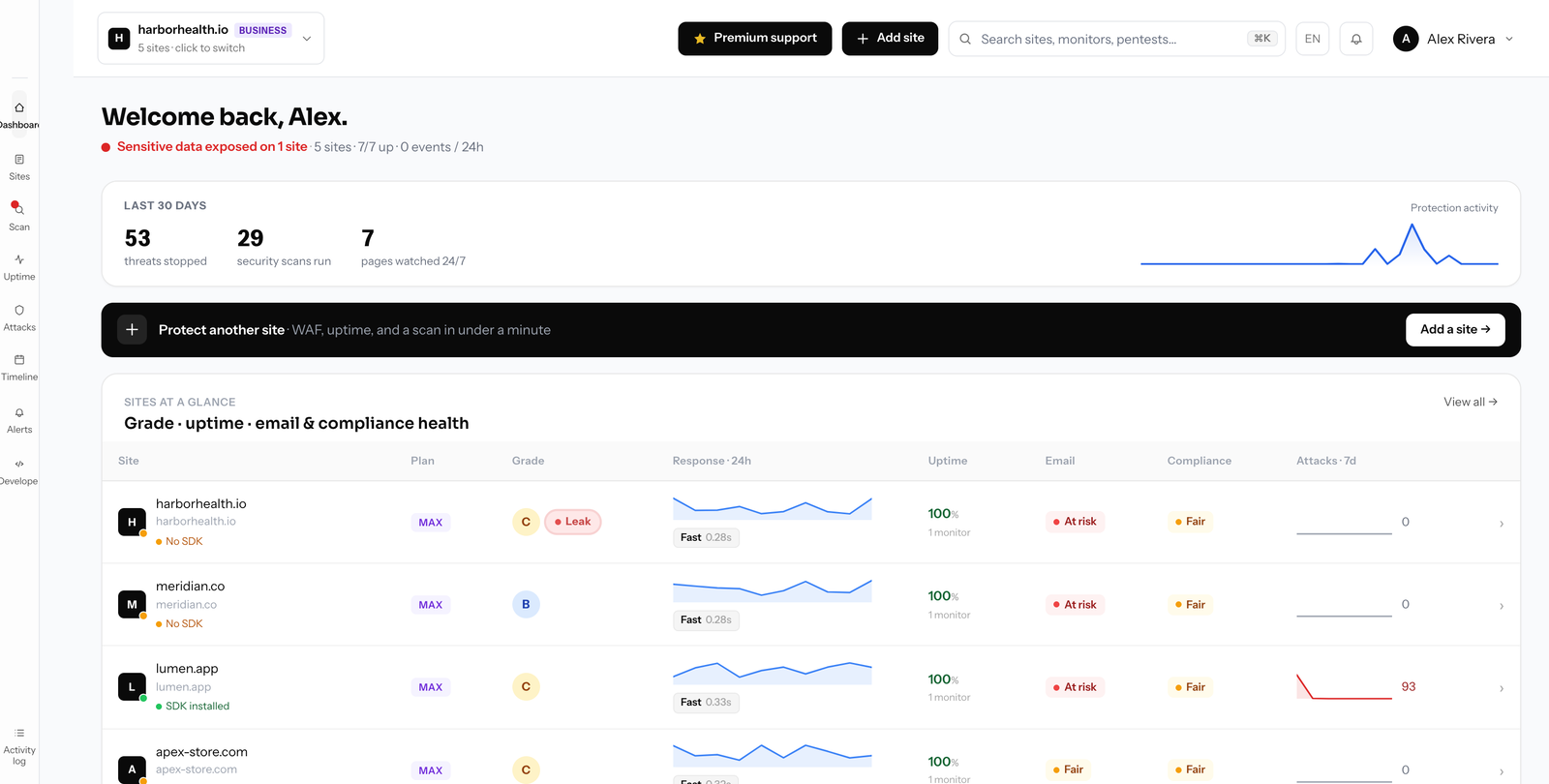
Protect & monitor your sites in seconds, no install to start. Uptime · SSL · Domain expiry · Website scan · Repo scan · Pentest · Compliance · Managed firewall
-
01
Add your site
Paste your domain. Nothing to install, and no security or coding knowledge needed.
-
02
Everything turns on, day one
Uptime, SSL and domain expiry, a full website and GitHub scan, a pentest and a compliance check, all from that one site.
-
03
Monitored 24/7 & alerted first
Downtime, attacks, new weaknesses and expiring certificates are watched around the clock, and each one reaches you before your users ever notice.
Security Scans & Protection, 24/7.
Automatically scan webapp for vulnerabilities, run pentests, and protect your websites, apps, GitHub repos & AI generated code.
The MCP tools and Agentic Skills sit right inside Claude, Cursor and Windsurf, guiding your AI to write secure code and preventing bad security practices before they ship. They catch exposed API keys, .env secrets, insecure configurations, vulnerable dependencies, unsafe code patterns, and common vibe-coding mistakes that can easily slip into production. Enterprise-grade security checks, without leaving your editor.
An enterprise-grade pentest built by security engineers, running around the clock safely against your live site: it never breaks your site or exposes real data. A surface pass finds what a hacker would; the deep pass probes open ports and server misconfigurations most scanners miss. The vulnerability database updates daily, so new threats are caught the day they land. 24/7 automated testing keeps looking even when you’re not. Every issue ships with a plain fix.
Connect a repo and it is checked for leaked passwords and API keys, exposed config files and open storage buckets, and for risky code and flaws that turn into a breach, before they reach production. Works with GitHub, GitLab and Bitbucket.


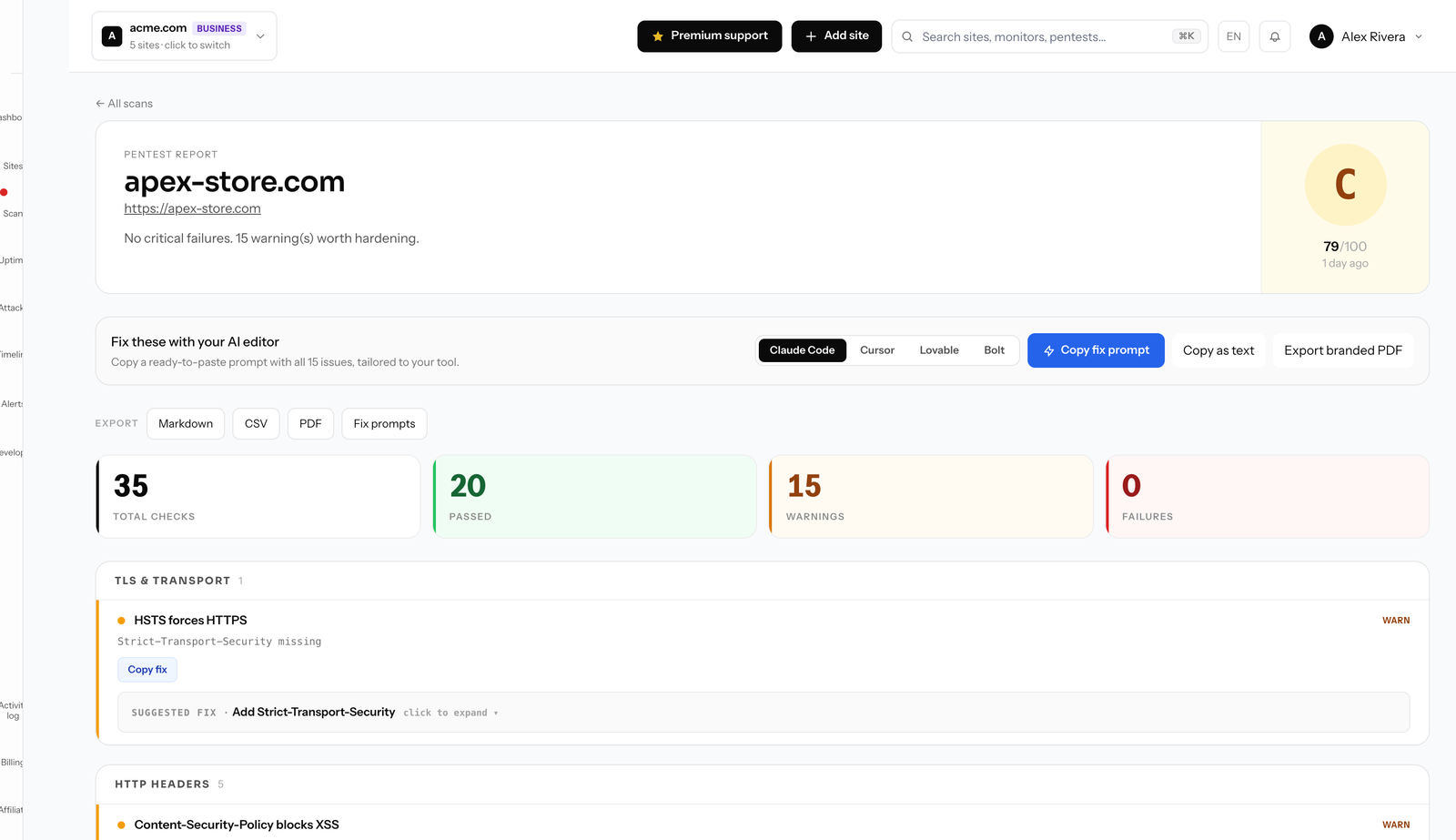
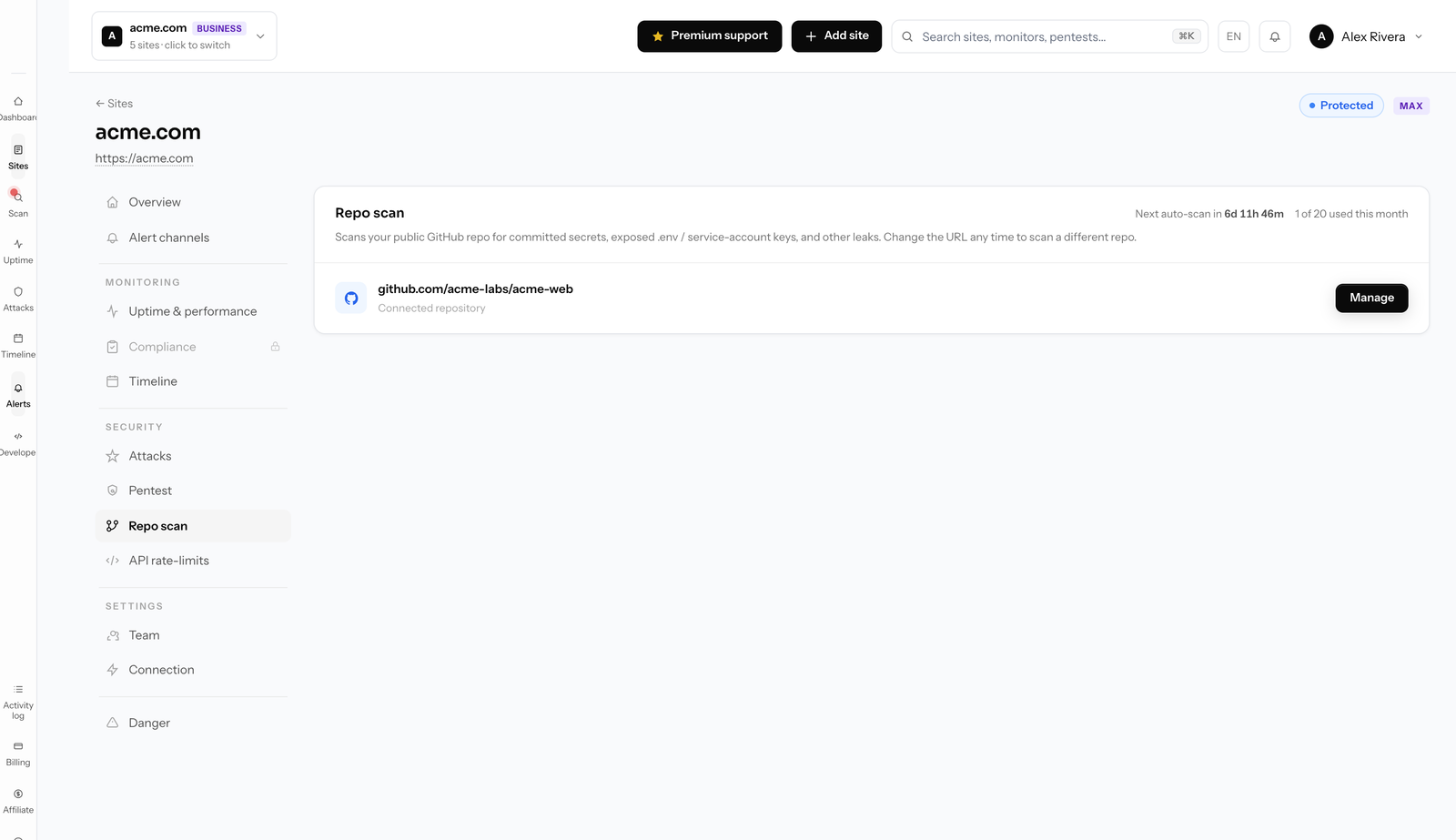
It is not just leaked secrets, it is how apps break.
The real weaknesses found in real sites, the kind that turn into a breach and lost revenue, prevented in seconds.
SQL injection
AI tools happily paste user input straight into database queries, and attackers walk right in.
Cross-site scripting (XSS)
Missing from most AI-generated code, so a script an attacker plants runs on your users.
Auth bypass
A route shipped with no login check. It happens more than you would think.
Public storage buckets
Customer data sitting in a bucket the whole internet can read.
Prompt injection
AI agents will hand over data when an attacker simply asks the right way.
Hardcoded secrets
Real API keys and passwords committed straight into the code.
SQL injection
AI tools happily paste user input straight into database queries, and attackers walk right in.
Cross-site scripting (XSS)
Missing from most AI-generated code, so a script an attacker plants runs on your users.
Auth bypass
A route shipped with no login check. It happens more than you would think.
Public storage buckets
Customer data sitting in a bucket the whole internet can read.
Prompt injection
AI agents will hand over data when an attacker simply asks the right way.
Hardcoded secrets
Real API keys and passwords committed straight into the code.
SSRF
The server can be tricked into fetching internal URLs it should never touch.
Insecure direct object access
Change one id in the URL and you are reading someone else's data.
Open redirect
A login link that quietly forwards users to an attacker's page.
Weak or missing crypto
Passwords stored in plain text, or tokens anyone can guess.
Outdated dependencies
A known-vulnerable package your project still pulls in.
Missing rate limits
A login or API with no cap, wide open to brute force and scraping.
SSRF
The server can be tricked into fetching internal URLs it should never touch.
Insecure direct object access
Change one id in the URL and you are reading someone else's data.
Open redirect
A login link that quietly forwards users to an attacker's page.
Weak or missing crypto
Passwords stored in plain text, or tokens anyone can guess.
Outdated dependencies
A known-vulnerable package your project still pulls in.
Missing rate limits
A login or API with no cap, wide open to brute force and scraping.
Auto Rate-limit APIs, Block attacks.
Manage API rate limits, block attacks in production, and protect against bad bots, active deception, and a managed WAF—all in one place.
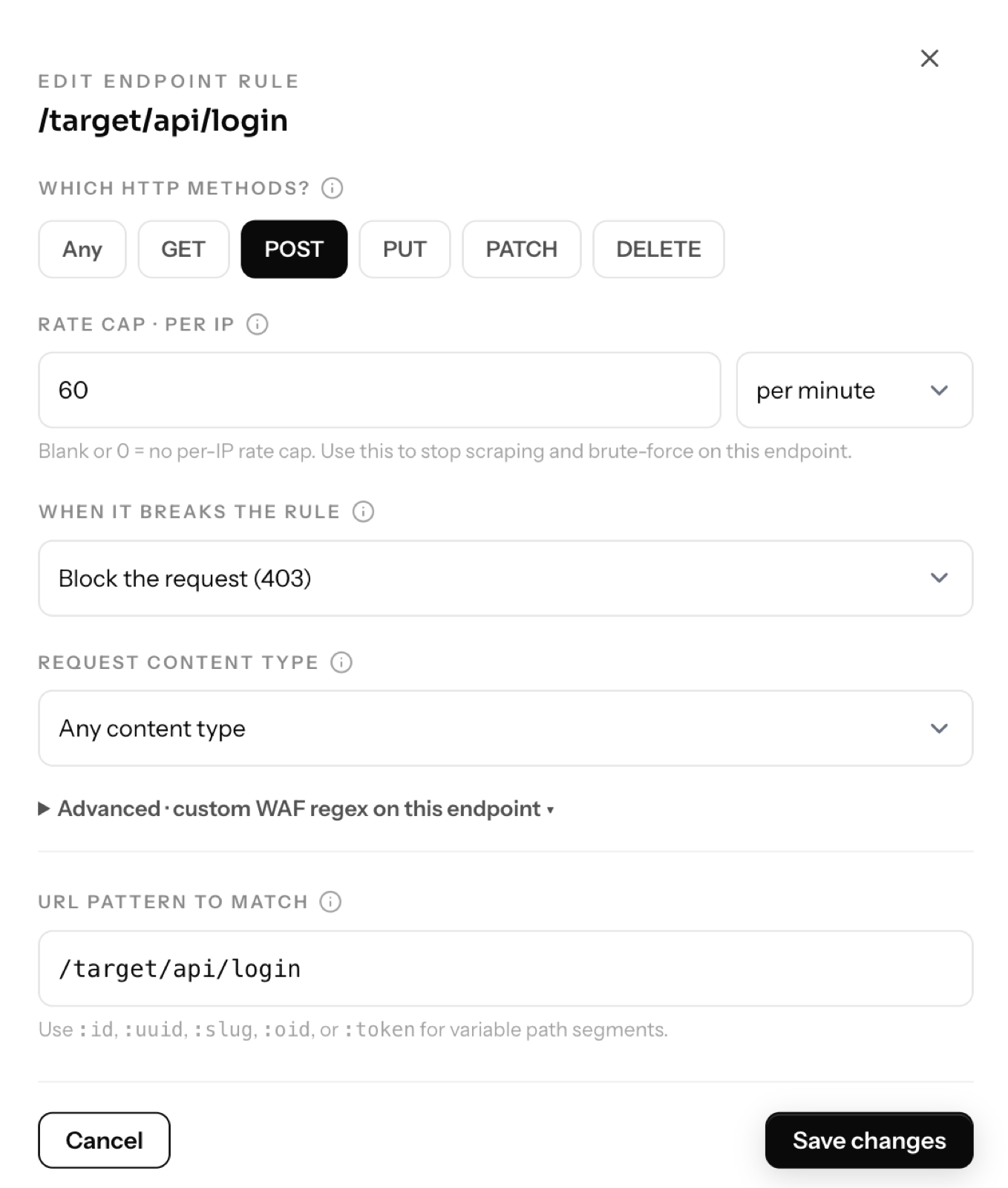
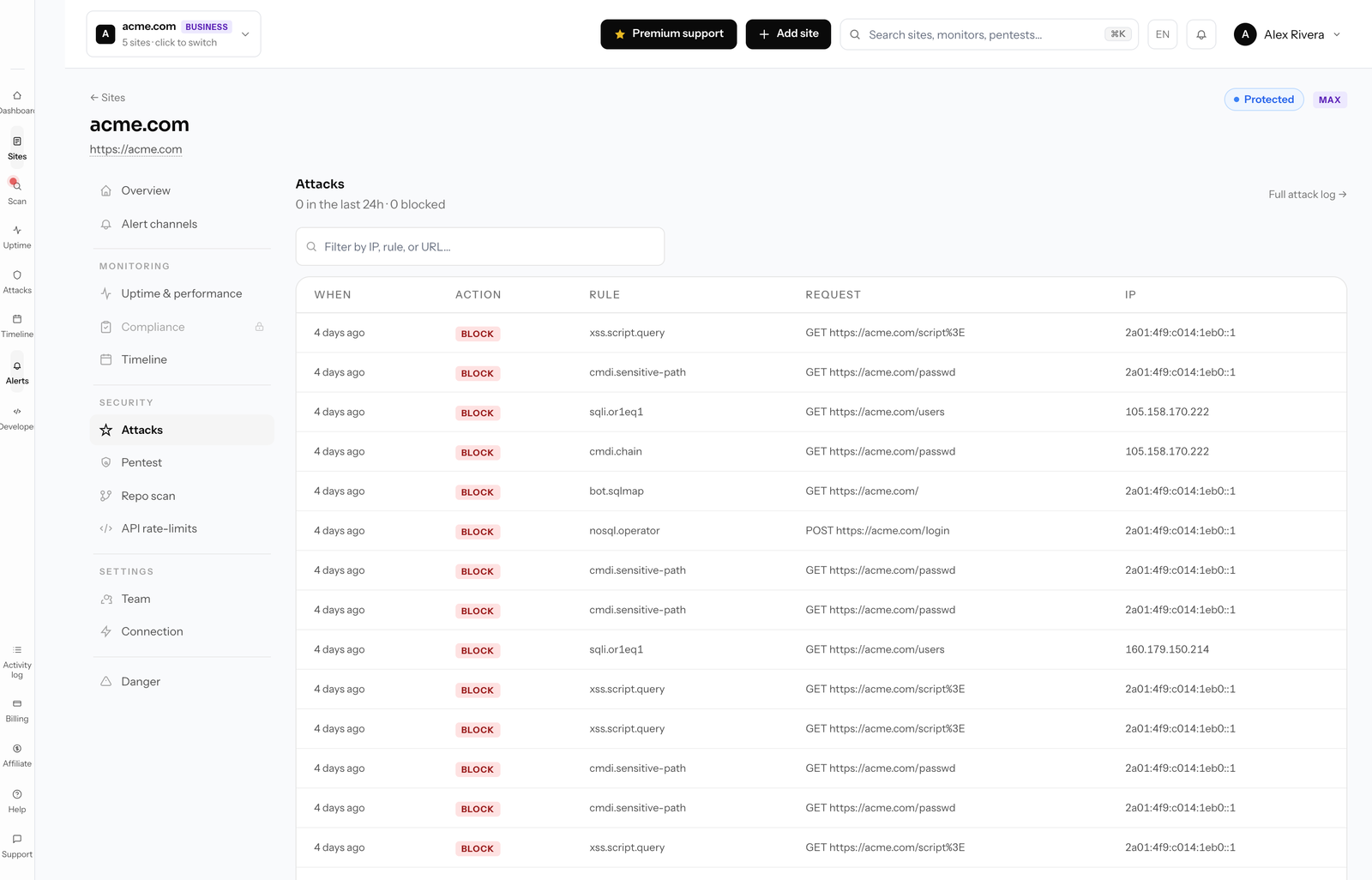
Your API endpoints are discovered automatically from real traffic, and the ones that need limits are flagged and capped per route and per IP for you. Login routes ship with brute-force caps out of the box, so credential stuffing and scraping stop at the door, with no rules to write.
Blocks SQL injection, XSS, SSRF and scanner bots with MITRE and OWASP tagged rules, updated weekly. Confirmed attackers get coherent fakes and honeytokens instead of your real data, so a breach is worthless and you get the early warning.
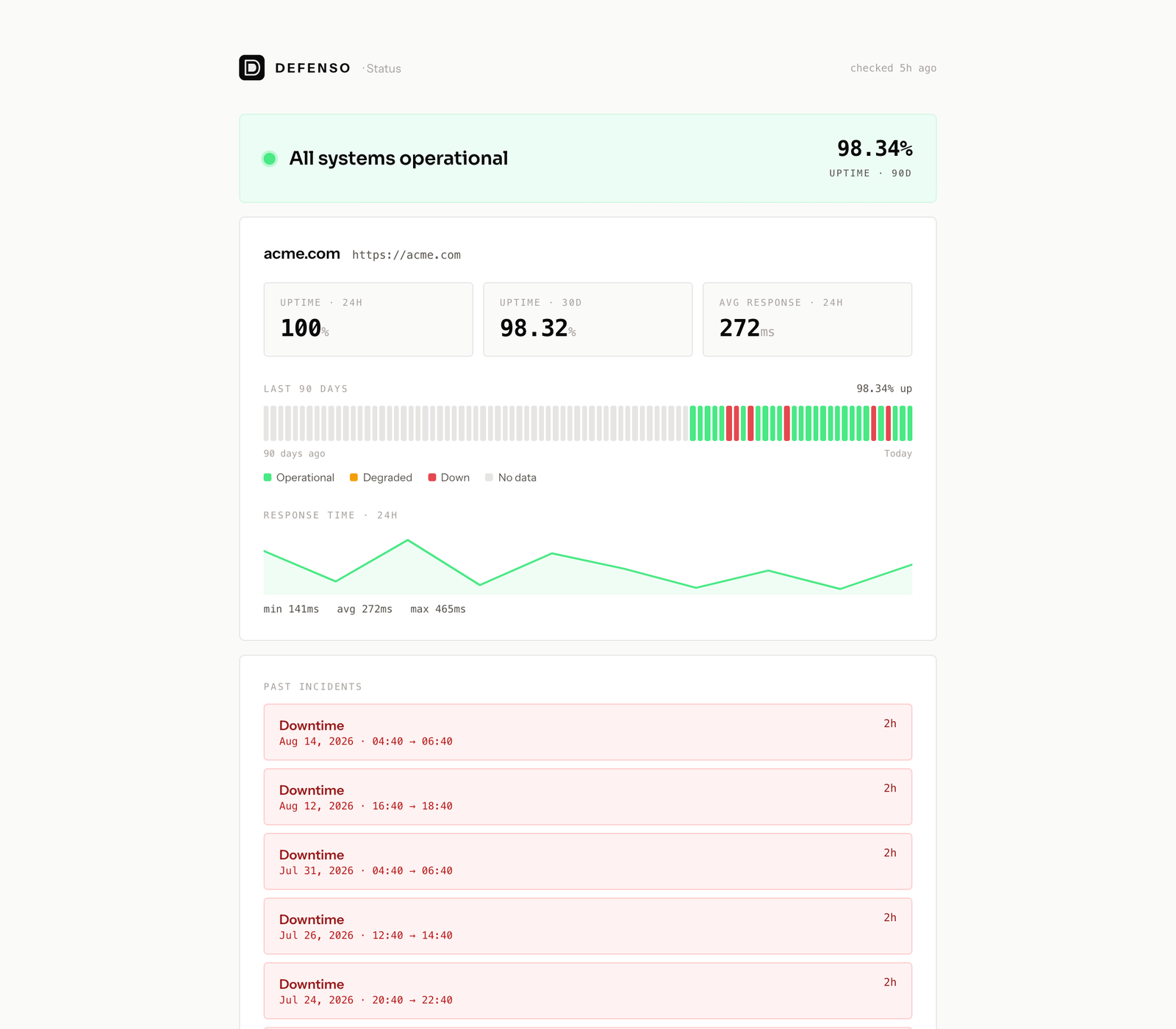
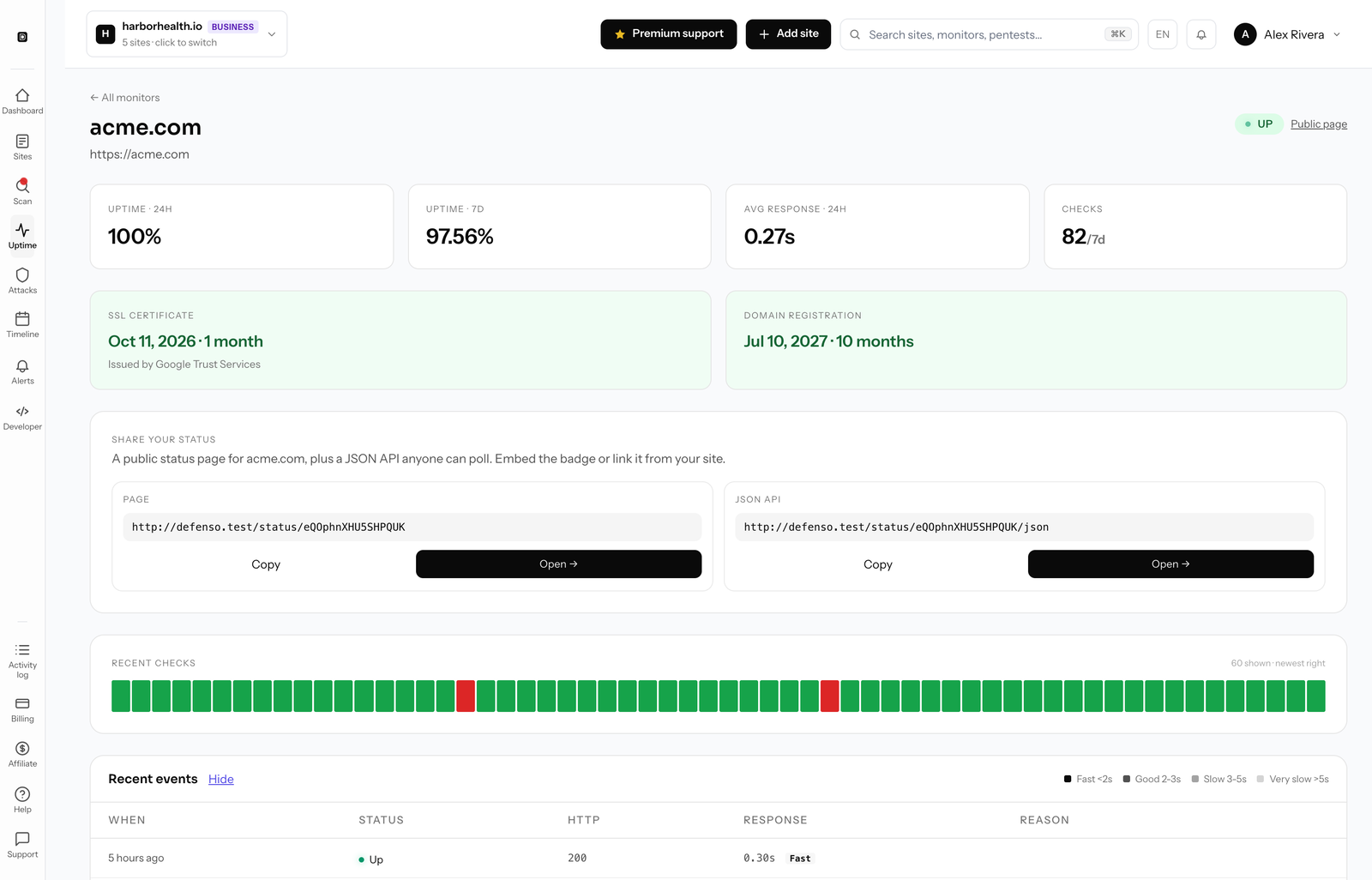
Multi-regions Uptime monitoring.
Your site is checked from data centers around the world, and an alert only fires when several regions agree it is really down. No false alarms from one bad hop.
Real uptime and response time from each location, so a blip in one data center never fakes an outage.
We watch your TLS certificate and your domain registration, and warn you in time to renew both, so visitors never hit a security error and your domain never lapses out from under you.


Customizable status pages & reports.
Share a branded status page for your site and your clients, and export the numbers as a clean report. When something breaks, nobody is left guessing.
A branded status page with your logo, colors and custom domain, plus a live status widget you can drop in your own site footer. Your customers and clients always know where things stand.
Export a clean uptime report as a PDF. Every incident is logged with its start and end time, and every check is kept for up to five years. Full incident management is coming soon.
sitetest.io is down, 3 regions agree
SQL injection blocked on /api/login
New leaked API key found in your repo
Alerts and downtime notifications, wherever you are.
A leaked API key is usually abused within the hour. A site that drops at 3am keeps costing you customers until someone notices. Defenso watches around the clock and reaches you the second it matters, on the channel you already live in.
Every attack blocked and every new weakness found. SQL injection, bot floods and credential-stuffing bursts come through with the payload and the rule that fired, and the moment a fresh vulnerability turns up on your site you hear about it with a clear fix ready to apply.
Uptime checks from multiple regions tell you the moment a site drops, before your users do. You also get a reminder well before the TLS certificate lapses and the padlock turns red, or the domain quietly expires, so nothing catches you off guard.
The same alert reaches you wherever you already work: email and the Defenso Alerts phone app by default, plus Slack, Discord, Telegram and a signed webhook for your own endpoint. An email can be missed; the app rings until you answer, so a 3am outage actually wakes you. Add your teammates' devices and emails too, and pick per site which channels fire.
GDPR and cookie compliance, generated for you.
Your live site is read for the policies, consent notices and accessibility basics you are missing, then editable GDPR, CCPA and WCAG documents are generated for you in minutes.
Your live site is checked for the privacy policy, terms, cookie policy and consent banner you are missing, across GDPR, UK GDPR, CCPA, PIPEDA, LGPD and cookie/ePrivacy. Turn on the regions that apply and the checklist adapts.
You get a real first draft filled from your details, not a blank template, plus an accessibility pass on your homepage. Edit everything in a rich-text workspace, keep revisions, and publish to a hosted page or PDF. The documents are yours.
 Vercel
 Next.js
 Laravel
 PHP
PHP Supabase
 Firebase
 Cursor
 Windsurf
 Claude Code
 FastAPI
 Django
 Rails
Rails Go
Go Rust
Rust Express
 Cloudflare
 Railway
 WordPress
 Lovable
 ReplitVercelNext.jsLaravelPHPSupabaseFirebaseCursorWindsurfClaude CodeFastAPIDjangoRailsGoRustExpressCloudflareRailwayWordPressLovableReplit
Your whole security platform, watching in 30 seconds.
Free to start, no card needed. Add your site and monitoring, scanning and alerts begin in under a minute.
Frequently asked questions.
Everything people ask before they start. Still unsure? We are one message away.
No. Add your domain and the scan, pentest, uptime, SSL and compliance checks all run from our side with nothing to install and no DNS change. The one-line SDK and the WordPress plugin are optional: you only add them when you want the managed firewall and rate limits running inside your app.
No. The scanning and monitoring never touch your live traffic, so they cannot affect your site. If you do install the SDK for the firewall, it adds about four milliseconds per request and is fail-open by design: if our service is ever unreachable, every request is allowed through and your app keeps serving normally. Your app keeps serving the whole time; only our live policy updates pause until we are back.
Yes, the free tier is real and needs no card. It covers one site with the managed firewall, up to five uptime monitors, a pentest every month, bot detection, active deception, a public status page, the MCP tools for your AI editor and seven days of logs. You can stay on it as long as you like and upgrade only when you need more sites, faster checks or longer retention.
Nothing breaks and you lose no data. Your account simply drops back to the free tier at the end of the billing period: your sites, history and settings stay, and only the paid extras (extra sites, faster intervals, custom WAF rules, longer log retention) switch off. You can resubscribe any time and pick up where you left off.
It complements Cloudflare rather than replacing it. Cloudflare is your CDN and edge; Defenso is the security layer for the app behind it, scanning, pentesting, watching uptime, catching leaked secrets in your code, and blocking attacks with rules you can audit. Most customers run both, and we keep our checker IPs off your Cloudflare firewall so a WAF rule never fakes a downtime alert.
Your websites, web apps, GitHub or GitLab repos and the AI-generated code on your machine are checked for vulnerabilities, misconfigurations and exposed secrets and keys. The checks are crafted by cybersecurity experts and run on every push, again on your live site, and on a repeating schedule, and you can start a fresh check any time. Every finding comes with a plain-language fix you can paste into your editor.
The same alert reaches you wherever you already work: email and the Defenso Alerts phone app by default, plus Slack, Discord, Telegram and a signed webhook for your own endpoint. An email can be missed; the app rings until you answer, so a 3am outage actually wakes you. You can add teammates and choose per site which channels fire.
No. Defenso is built for everyone, from first-time founders and vibe coders to seasoned developers and security teams. It runs automatically, explains every finding in plain language, and hands you a ready-to-paste fix instead of a jargon report. If you can add a domain, you can use it, and if you want the depth, it is there too.
Yes. Our MCP server gives Claude Code, Cursor, Windsurf and VS Code real security tools: scan a site, review the code you just wrote, explain a firewall verdict, and catch leaked secrets, right inside the editor. It is read-only by default and returns structured data, so your assistant reasons over facts instead of guessing.
Yes. We do not store your application data, only the logs and results needed to run your checks and show your history, kept for your plan's retention window. Those logs, your account details and any tokens are encrypted at rest, and alerts never leak internal IDs. Payments are handled entirely by Stripe, so we never see or store your card. Defenso is fail-open and read-only by default, so it reduces your risk, not adds to it.